

• SPIDER 300A installed close to Dr. Karl Remeis-Sternwarte in Bamberg

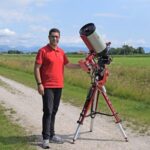
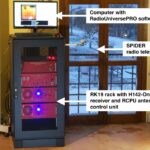
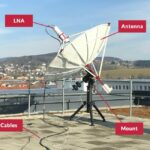
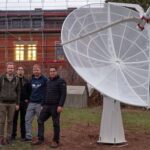
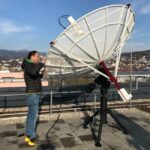
    We installed one of our SPIDER 300A advanced radio telescopes in Dr. Karl Remeis Observatory for the Astronomy Institute of Erlangen-Nuernberg University in Bamberg, Germany. The radio telescope is composed by the 3 meter antenna with computerized weatherproof mount installed in front of the observatory and the 1420 MHz H142-One radio astronomy…
  • SPIDER 300A installed in New Mexico Tech college, close to VLA!

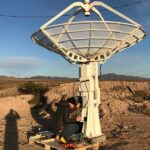
    The advanced radio telescope SPIDER 300A has been installed in New Mexico Tech college in Socorro (USA), headquarter of Very Large Array (VLA) radio telescope operated by the National Radio Astronomy Observatory (NRAO)! The new SPIDER 300A will be used for research in radio astronomy and for students alike. Astrophysics…

  • SPIDER 230C installed in Deggendorf Institute of Technology

    SPIDER 230C compact radio telescope has been chosen by Deggendorf Institute of Technology as instrument to introduce students to radio astronomy. Deggendorf Institute of Technology is a university in Bavaria (Germany) offering first level education in a modern environment equipped with the latest technology. After our first visits in which…

  • Taurus A recorded with SPIDER 300A radio telescope

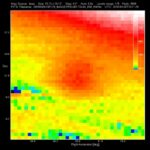
    Taurus A is the radio source in Taurus constellation that corresponds to the Crab Nebula (M1), the supernova remnant exploded on July 4, 1054 and noted by Chinese and Arabian astronomers of the time. Since then, the gas cloud has expanded and today is over 6 light years large. In this article we see how the SPIDER 300A radio telescope “discovered” it by capturing the radio waves emitted by Taurus A and converting them into a radio map, a real photograph in radio waves of this nebula. In fact it is believed that Taurus A emits radio waves for synchrotron radiation caused by electrons in fast spiral motions around magnetic field lines generated by the pulsar inside it. Thanks to the WEB300-5 3 meter diameter antenna and the 1420 MHz H142-One receiver, the SPIDER radio telescope was able to easily record the weak signal and, thanks to the precise mount and pointing system, it generated a radio map with the same technique used by professional radio telescopes.

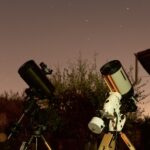
  • One telescope to do everything, with EAGLE

    Is it possible to have a single telescope to observe and take pictures of any object in the Universe, easy to use, power and transport? Is it possible to have a telescope that has the power of a small astronomical observatory but with the portability of an amateur telescope? After more…

  • Radio astronomy at school with SPIDER radio telescopes

    Is it possible radio astronomy at school? In general, the activities that many schools develop in astronomy are usually made ​​with optical telescopes because instruments for other electromagnetic spectrum bands are considered too expensive or difficult to use. This often translates into single evening visits with students at the public observatories, so you can not conduct a continuous study. Thanks to our SPIDER radio telescopes is now really possible to make radio astronomy at school because, unlike an optical telescope, they can also be used during the day and then during normal lesson time! The SPIDER radio telescope is installed outside and it’s remotely controlled for example from the classroom or the laboratory.

  • Star Adventurer versus EAGLE CORE kit: astrophotography with DSLR camera

    Star Adventurer and EAGLE CORE kit allow you to track the apparent motion of the stars in the sky and, if you have a DSLR camera, allow you to record long exposures of deep-sky objects such as galaxies, nebulae or star clusters. But how long? In fact, the longer the exposition time that our instrumentation will allow us…

  • Celestron EdgeHD: versatile telescope, many applications

    Celestron EdgeHD telescopes are the evolution of classic Schmidt-Cassegrains: not only they can be used in visual (unlike the SC, they are perfect also with very large apparent field of view eyepieces) and for planetary and lunar photography but, thanks to dedicated focal reducers, they are great instruments for long-exposure astrophotography. In this article…

  • The radio Sun

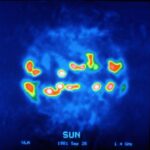
    The Sun is one of the strongest radio sources in the sky: if the part of the Sun emits more in the visible wavelengths is called photosphere, the radio frequencies born in the chromosphere and in the corona, the solar atmosphere. The solar surface has a temperature of about 6000K, and even if the gas at this temperature emits more wavelengths in the frequencies of visible and ultraviolet light, because of its proximity we can also record the radio emission.

  • A compact radio telescope for amateur radio astronomy

    Is it possible to make amateur radio astronomy? If you already have an equatorial mount (the one used with optical telescopes) with at least 50 kg load capacity and Losmandy dovetail clamp (like an EQ8), thanks to the products developed by Radio2Space, you can turn your telescope into an amateur radio telescope, and start your amateur radio astronomy program without the need to have extensive knowledge of radio techniques.