


Astrophotography camera for deep-sky: what to choose
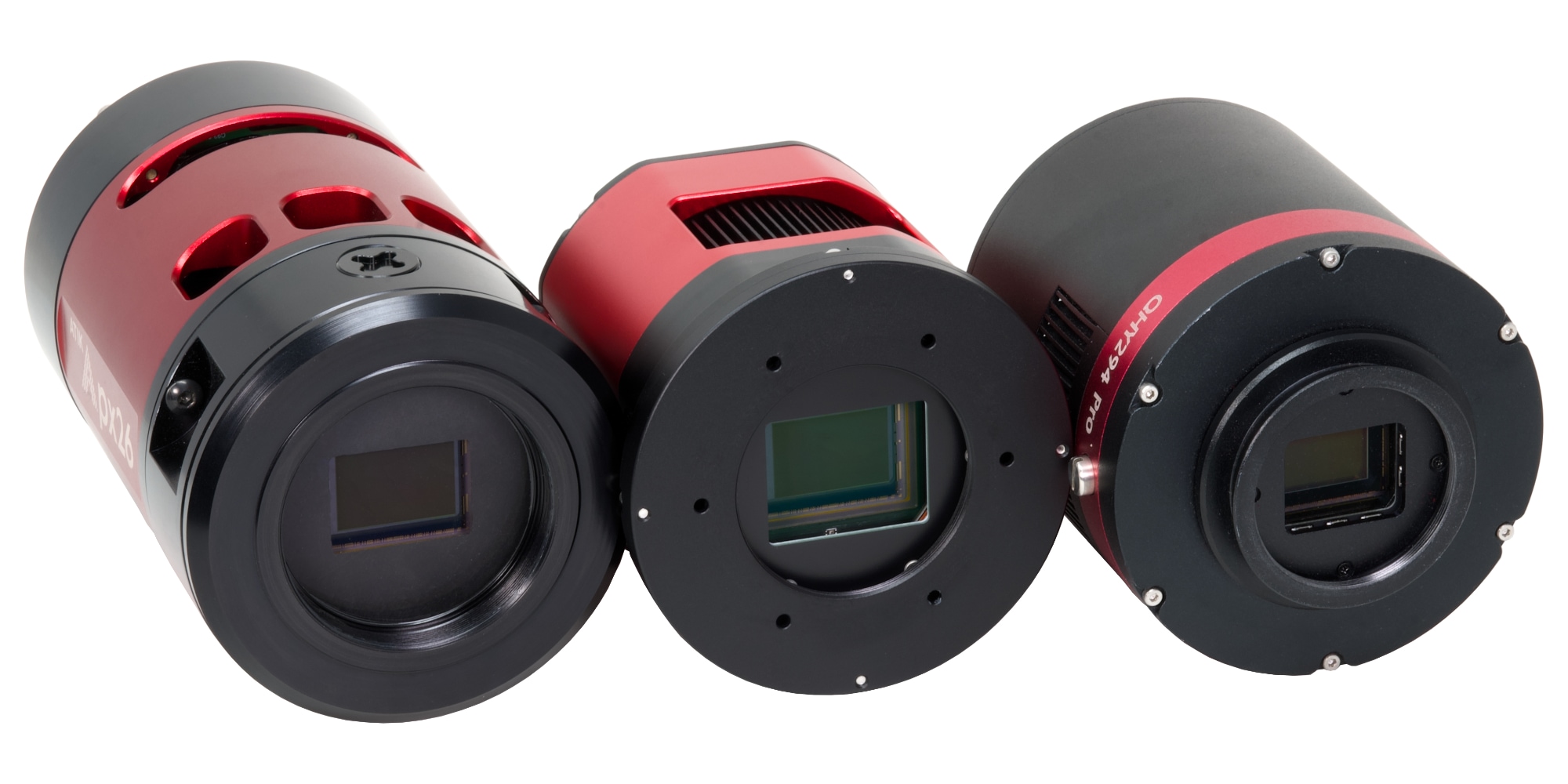
Choosing the right astrophotography camera for deep-sky imaging can seem complex at first. In this article, with practical examples, we’ll explore how to select a deep-sky astrophotography camera capable of capturing the faintest details of galaxies, nebulae, and star clusters through long-exposure imaging. These cameras differ from those used for planetary and lunar imaging, which typically record short video sequences. A deep-sky astrophotography camera is usually cooled — it includes a Peltier system that keeps the sensor temperature low and stable, reducing image noise and improving overall quality.
Key parameters when choosing an astrophotography camera for deep-sky imaging
Before comparing models, let’s define a few essential technical concepts:
– Resolution Capability: the smallest angular distance (in arcseconds) at which two objects can be seen as separate, depending on the telescope’s diameter. It can be estimated with the formula a= 120 / D where a is the resolution in arcseconds and D is the telescope diameter in millimeters.
– Seeing: a term describing atmospheric conditions (turbulence, humidity, light pollution) that affect image sharpness in both visual and photographic observation.
– Sampling: one of the most critical parameters when selecting a camera for deep-sky astrophotography. Sampling describes how many arcseconds of the sky are recorded by each pixel of the sensor.
If you already own a telescope, your choice of astrophotography camera depends heavily on the sensor’s pixel size, as it determines the sampling ratio.
Sampling
Let’s consider a practical example using the Takahashi FSQ-85, which has an 85 mm aperture and a 450 mm focal length. Its resolution capability is: 120 / 85 = 1.41 arc seconds. According to the Nyquist principle, the sensor’s pixel size should cover more than half of the smallest detail the telescope can resolve. Therefore, each pixel should record an area of the sky equal to about 1.41 / 2 = 0.70 arcseconds.
To calculate sampling, we use the formula:
C = (206265 x d) / L
where:
• ( L ) = telescope focal length in millimeters
• ( d ) = sensor pixel dimensions in millimeters
• C = sampling value in arc seconds
• 206265 = conversion factor from radians to arc seconds
If we test a camera equipped with the Sony IMX571 sensor, which has 3.76 µm pixels, we get:
(206265 x 0.00376) / 450 = 1.72 arc
This is slightly above the theoretical 0.70 arcseconds, meaning we are undersampling the image. The camera does not fully record the finest details the optics can resolve.
However, real-world seeing conditions limit resolution. Under average seeing, an image sampled around 1.5–2 arcseconds/pixel is ideal. Therefore, the 1.72 arcseconds/pixel from the IMX571 sensor is an excellent match for the FSQ-85 under typical conditions.
If we invert the formula to find the optimal pixel size range for our telescope:
d = (L x C) / 206265
1) with 1,5 arc seconds: (450 x 1,5) / 206265 = 3,3 micron
2) with 2,0 arc seconds: (450 x 2) / 206265 = 4,4 micron
So, the best astrophotography camera for deep-sky imaging with this telescope should have a pixel size between 3.3 and 4.4 µm.
Other important features when choosing a deep-sky astrophotography camera: sensor type – color or monochrome
Deep-sky astrophotography cameras are available with either color or monochrome sensors: color sensors produce color images directly and are simpler to use; monochrome sensors require filters (such as LRGB or narrowband sets) and more processing, but they offer higher sensitivity, allowing you to capture faint structures with shorter exposures. Monochrome cameras also enable the use of narrowband filters (H-alpha, OIII, SII) that dramatically increase nebular contrast, even under light-polluted skies.
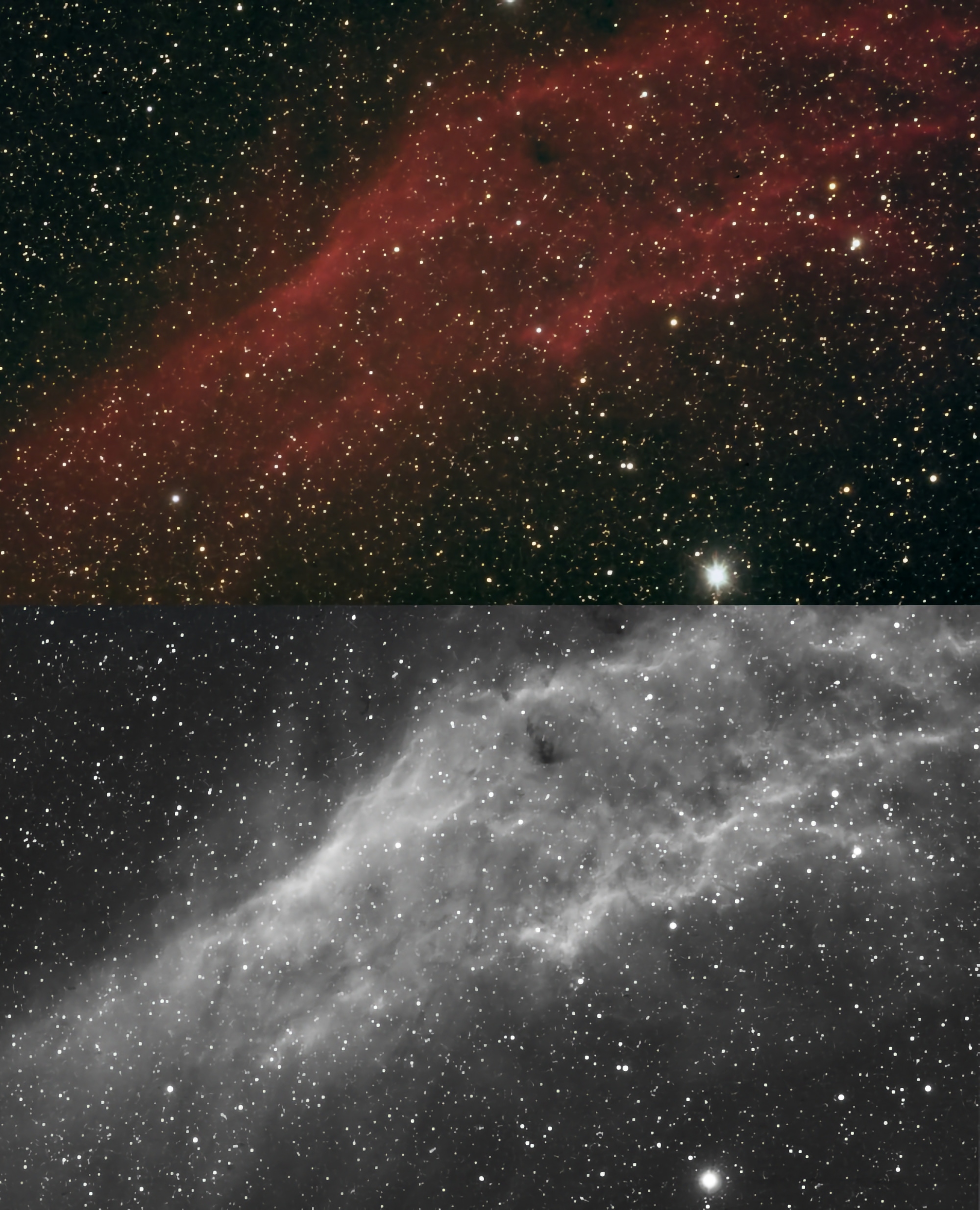
If you shoot from a dark site, a color camera with a broadband filter may be the best choice. If you image from a light-polluted area, a monochrome camera will deliver superior results. For this reason, most experienced astrophotographers prefer monochrome sensors despite their greater complexity.
Other important features when choosing a deep-sky astrophotography camera: sensor size
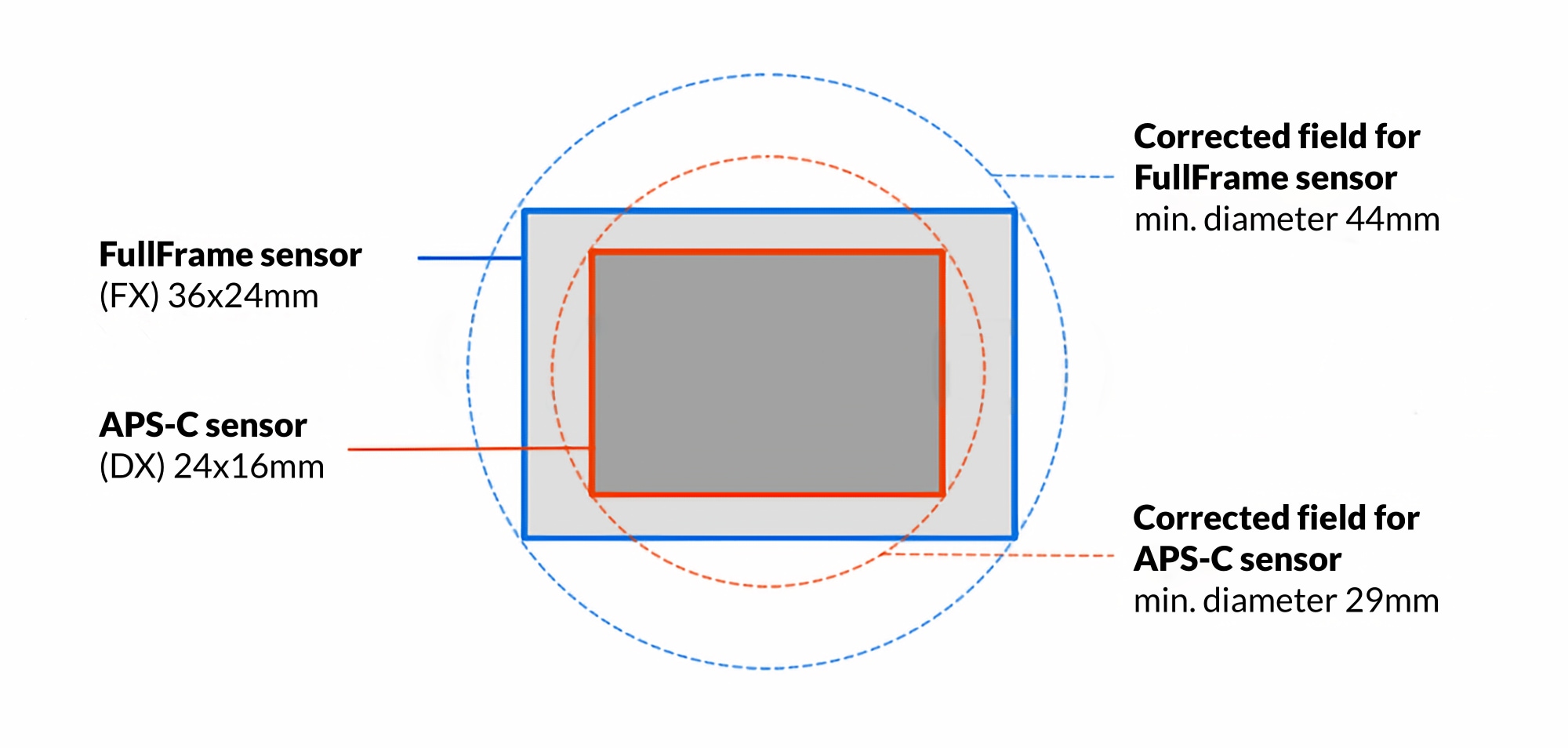
With the same telescope focal length, a larger sensor provides a wider field of view — ideal for framing extended nebulae or galaxies. However, cameras with larger sensors are also more expensive. It’s also crucial to match the camera sensor to your telescope’s corrected image circle. For instance, using a full-frame (43 mm diagonal) sensor with a telescope that corrects only 20 mm will result in distorted stars near the edges. The Takahashi FSQ-85, however, offers a fully corrected 44 mm image circle, making it suitable for full-frame astrophotography cameras for deep-sky imaging.
Astrophotography camera for deep-sky: conclusions
Selecting the best astrophotography camera for deep-sky depends on balancing several factors: your telescope’s focal length, the pixel size that ensures proper sampling, and the type and size of the sensor. Understanding these relationships allows you to choose the most suitable deep-sky astrophotography camera for your observing conditions and imaging goals — whether you want to capture the vast beauty of a nebula or the fine details of a distant galaxy.