

• How to use SESTO SENSO and ESATTO with NINA astronomy imaging suite

    How to use SESTO SENSO and ESATTO with NINA astronomy imaging suite

    NINA astronomy imaging suite (Nighttime Imaging ’N’ Astronomy) is a powerful, free, open-source astrophotography software known for its broad ASCOM hardware compatibility, advanced automation, and deep customization, making it ideal for users who want full control of complex imaging sessions but are comfortable with a steeper learning curve. NINA astronomy…
  • Astrophotography camera: what to choose? ATIK APX26 cooled camera

    Astrophotography camera: what to choose?

    Choosing the right astrophotography camera is one of the most important decisions an astrophotographer has to make. Whether you’re just starting your journey under the stars or you’re ready to upgrade your gear, understanding the different types of cameras and their features will help you get the best results from…

  • How to remotely control your Celestron equatorial or alt-azi mount with PLAY

    How to remotely control your Celestron equatorial or alt-azi mount with PLAY

    PLAY astrophotography software can be used also to easily control Celestron computerized mounts and telescopes that are compatible with the CPWI control software. This enables you to take full advantage of remote operations and automation, which are essential in astrophotography. In this article, we’ll show you how to properly set…

  • Installing PrimaLuceLab device drivers on EAGLE or Windows 10/11

    Installing PrimaLuceLab device drivers on EAGLE or Windows 10/11

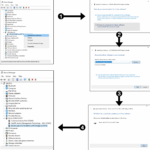
    When setting up a modern astrophotography telescope, precise control over your equipment is essential—and that starts with making sure every device is correctly installed and recognized by your computer. Whether you’re using our EAGLE control unit or a standard Windows 10/11 PC, installing the correct drivers for your PrimaLuceLab devices,…

  • How to wirelessly access EAGLE’s Lights-out Management

    How to wirelessly access EAGLE’s Lights-out Management

    One of the most advanced features of the EAGLE6 computer for telescopes is its integrated Lights-out Management (LOM) system—a hardware-based solution that provides full remote control of the EAGLE even when the Windows operating system is powered down. Whether you’re operating your telescope from a remote observatory or simply want…

  • Which DSLR/mirrorless cameras are supported by PLAY?

    Which DSLR/mirrorless cameras are supported by PLAY?

    Starting with version 1.9.5, PLAY introduces support for Canon and Nikon DSLR and mirrorless cameras, expanding its compatibility beyond dedicated astronomy cameras. This new feature allows astrophotographers to easily control their Canon or Nikon camera directly from PLAY, enabling image capture and saving. On this page, you’ll find the list…

  • Three ways to remotely turn your EAGLE on

    Three ways to remotely turn your EAGLE on

    The EAGLE introduces new ways to remotely turn it on, enhancing flexibility and convenience for remote observatory operation. Whether your telescope is located nearby or in a remote observatory, you now have three different methods to power on your EAGLE. In this article we’ll describe how to activate each method…

  • How to easily transport a telescope for astrophotography with the EAGLE computer

    How to easily transport a telescope for astrophotography with the EAGLE computer

    Finding the right way to transport a telescope can be a complex task. Each time you move your setup, you must carefully pack delicate instruments, reassemble the entire system, reconnect cables, and recalibrate everything before starting a new imaging session. However, with the EAGLE computer, you can significantly simplify this…

  • Enhancing telescope safety with the PLL ASCOM SafetyMonitor driver

    Enhancing telescope safety with the PLL ASCOM SafetyMonitor driver

    In modern astronomy, automation plays a crucial role in ensuring efficient and seamless observations. However, for automation, telescope safety monitoring is just as important as precision and performance. Unexpected conditions—such as unstable power supply, or unwanted telescope motion—can lead to observation errors or even damage sensitive equipment. To address this…