


ASTRO-RES Observatory Station installed at Atlar Innovation Space Center, Portugal
We installed a new ASTRO-RES Observatory Station in Portugal, at the Atlar Innovation Space Center. The station uses a Celestron RASA14 optical tube on a 10Micron AZ2500 DDS mount set in equatorial mode with a special EQ column, and an SBIG Aluma AC4040 cooled camera. Everything is protected by our OUTPOST 3M dome and remotely controlled thanks to the EAGLE6 XTM computer, with SESTO SENSO 3 SC robotic focuser, GIOTTO430 flat field generator and ALTO-3 telescope cover motor. The station works for astronomical research and for Space Situational Awareness (SSA). This is why we selected a fast and wide field optical system, a very precise mount and a large format cooled camera.
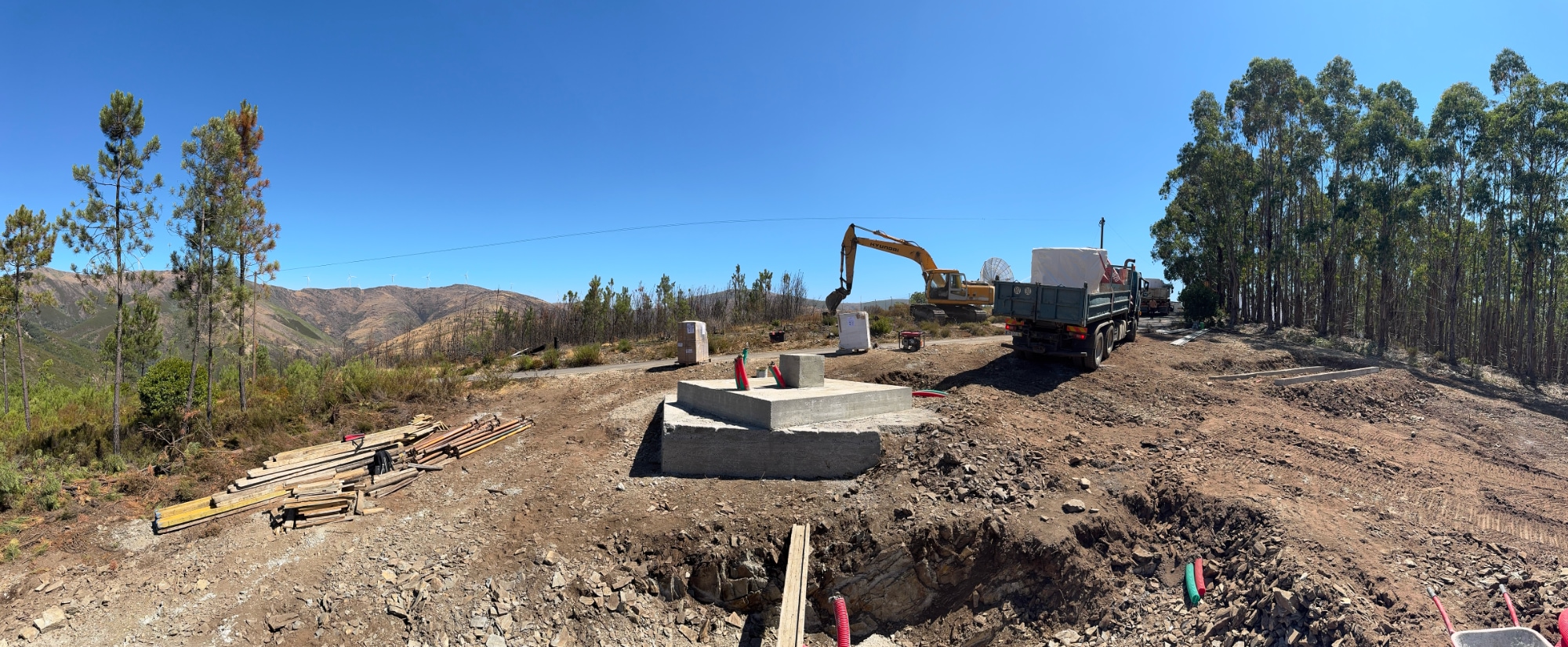
Every installation starts long before we arrive on site. We provide the customer with the project, the position and the dimensions of the concrete base for the dome and for the mount. Here you can see the result: the base is ready, the conduits for power and network cables are already in place.
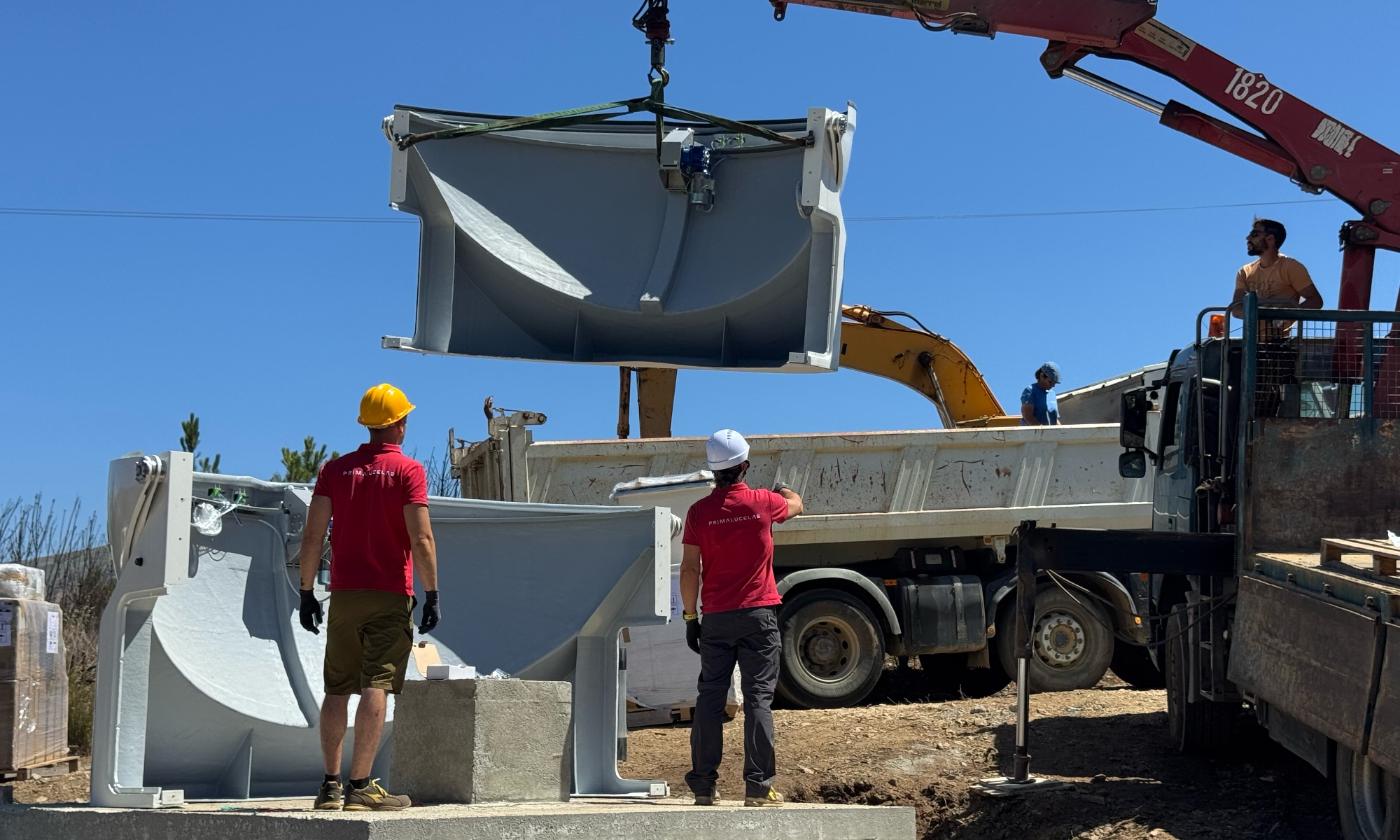
The OUTPOST 3M arrives in two halves. This is one of the big advantages of our dome: it can travel by standard truck and it can be lifted on site with a small crane. Here our team is positioning the two halves on the concrete base, one after the other.
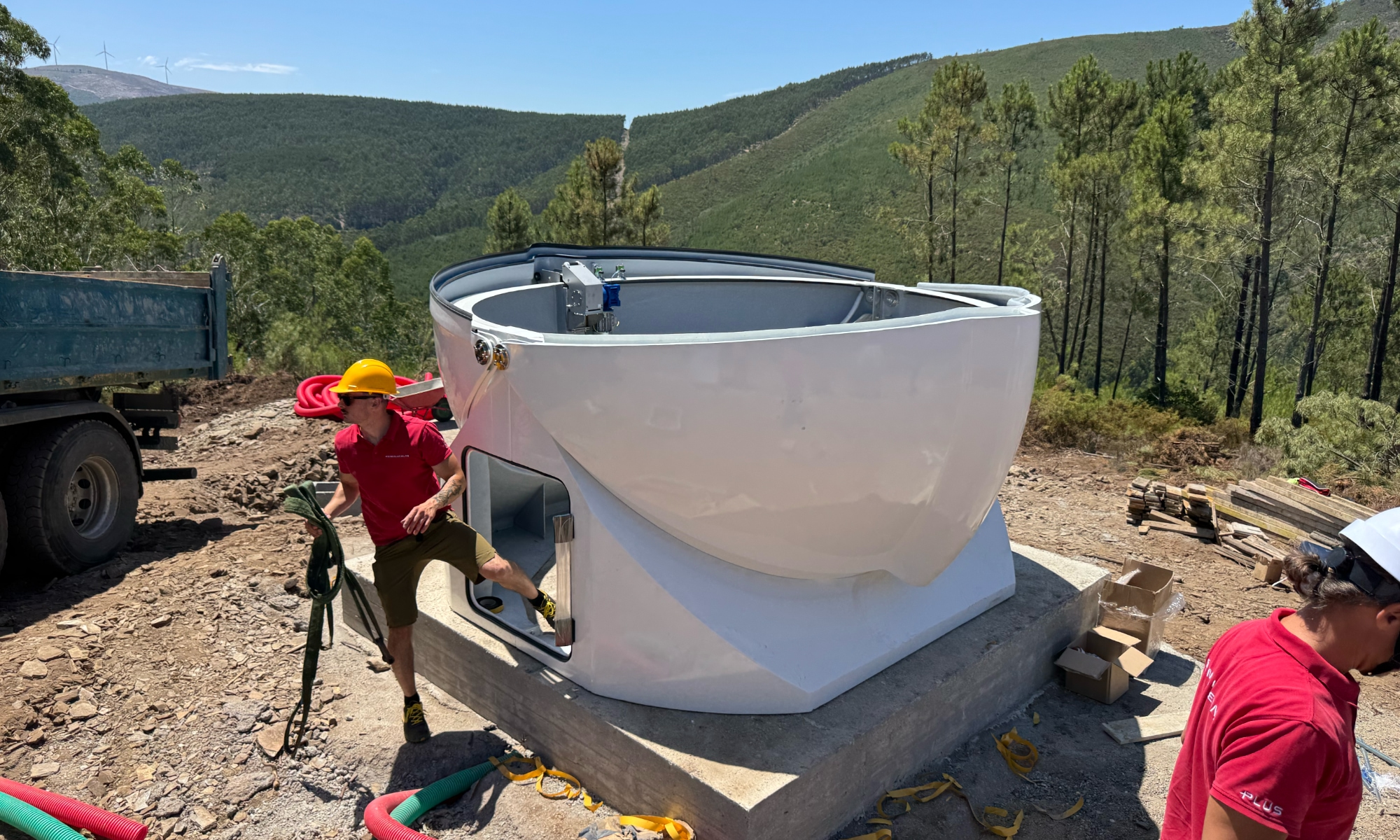
Once the two halves are joined, the dome is basically ready. All the mechanical parts, the rotation system, the shutters and the motors are already pre-assembled and tested in the PrimaLuceLab factory. Then we assemble it on site, this is what makes the installation so fast.
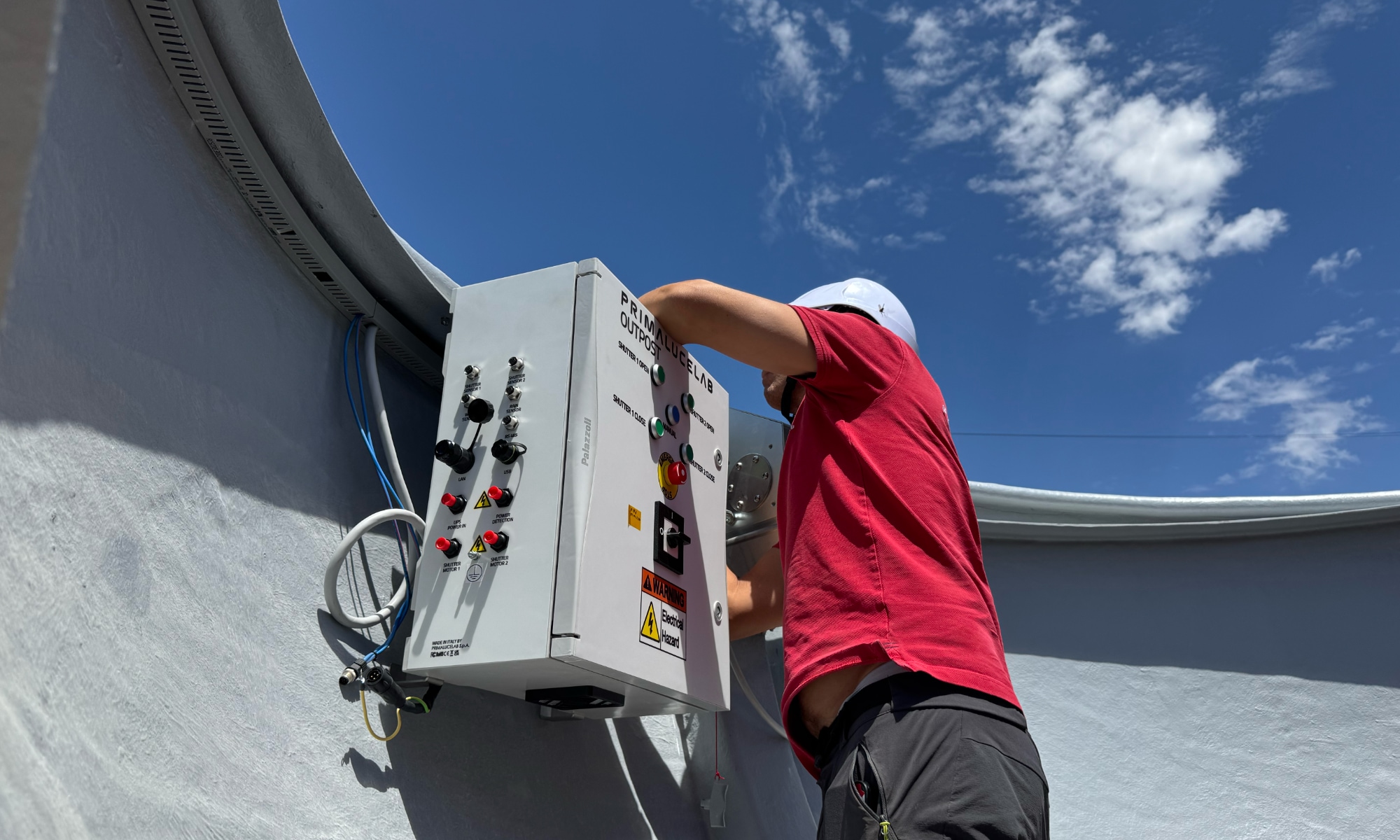
The control box manages the shutter motors, the sensors and the emergency functions of the dome, with manual controls available on the front panel. From here the dome talks with the EAGLE control computer, so the shutter can open and close automatically during a remote session, and close by itself if something goes wrong.
The dome is then anchored to the concrete base. This site is on a hill and it can be windy, so the fixing is an important part of the job. Once anchored, the dome becomes a single solid structure with the base.
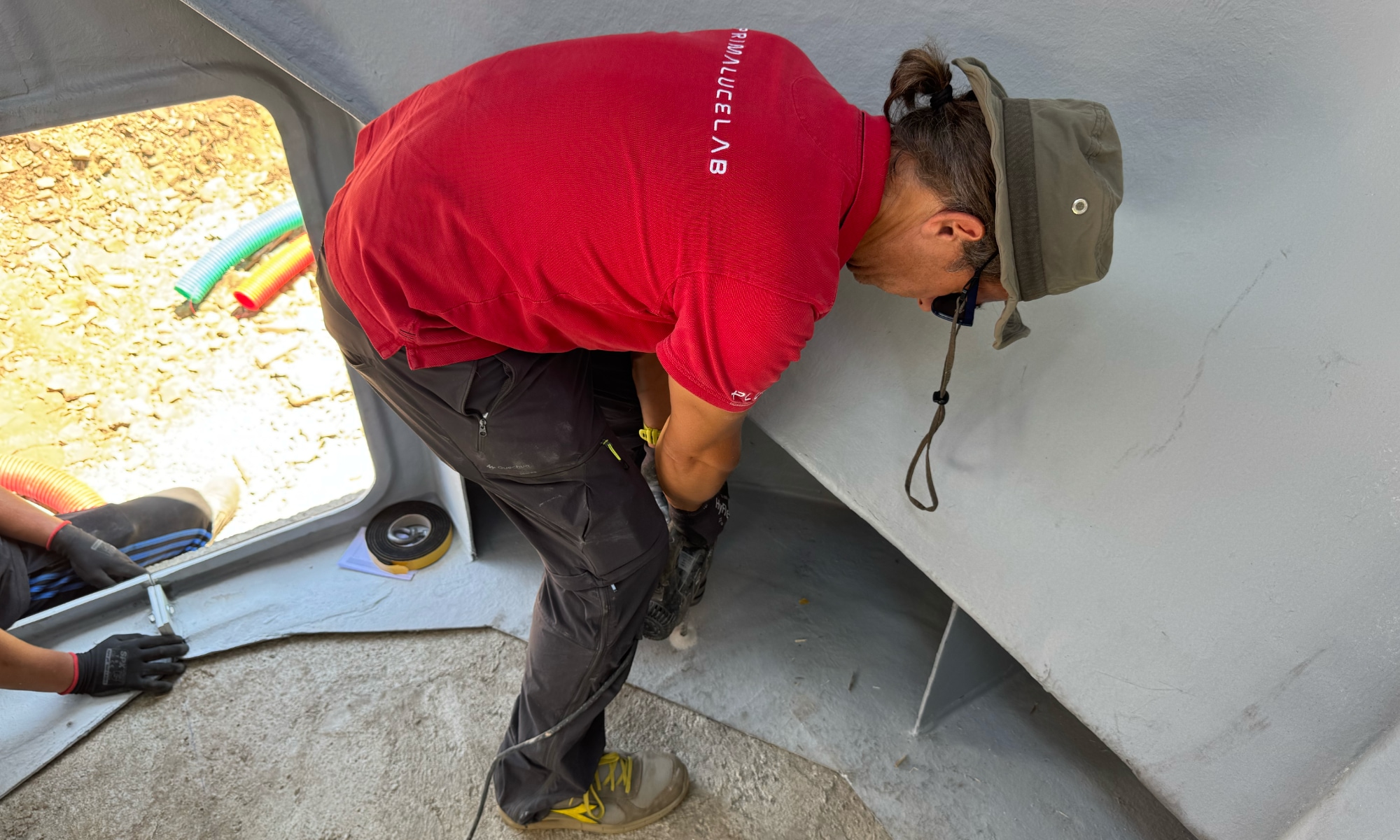
The service door gives access to the inside of the dome for maintenance and for the manual operations. Even if the observatory is designed to work remotely, you always need a comfortable way to enter and work on the instrument.
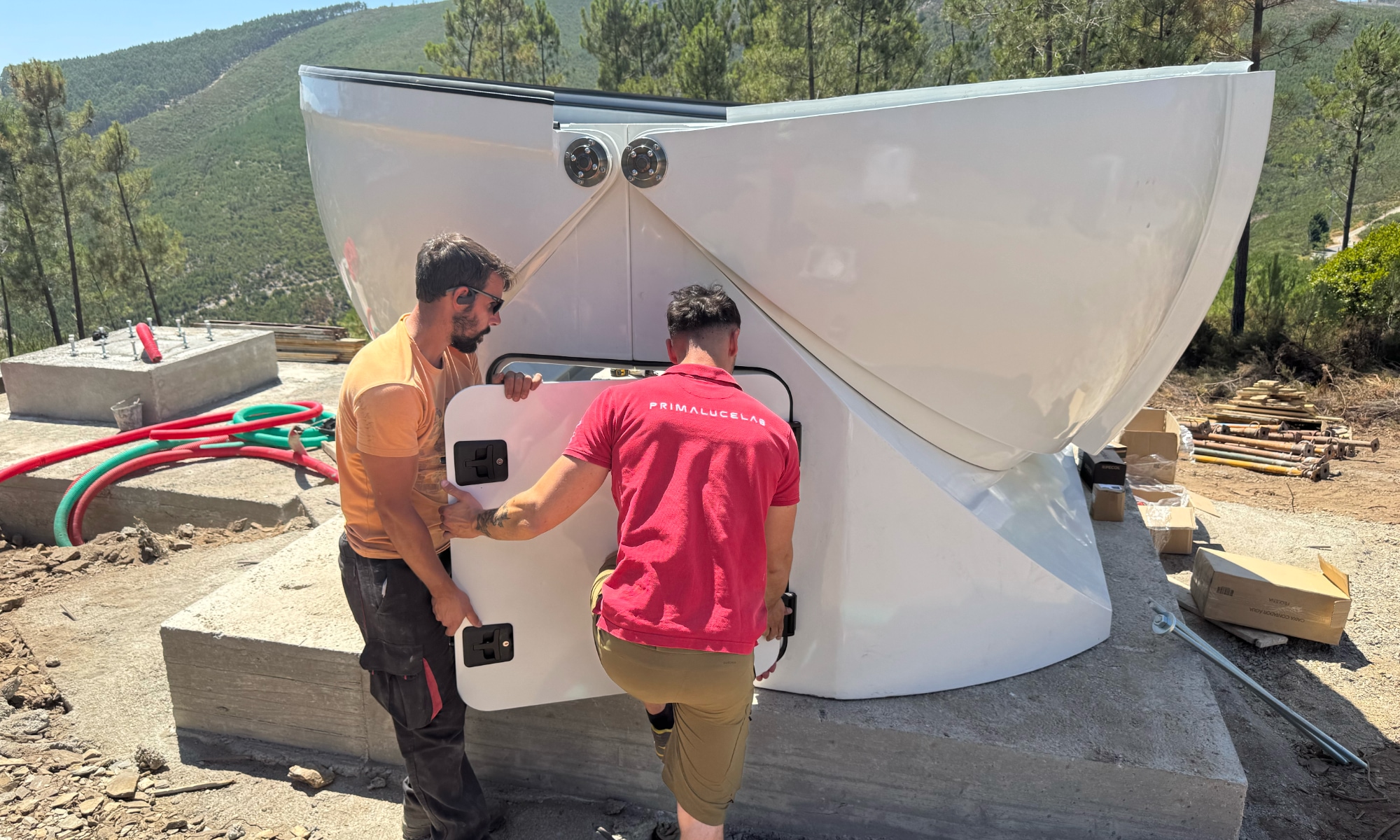
On the side of the dome we install the compartment that is able to host the rack, so the additional electrical and network equipment you may want to install is separated from the observing room. This keeps the inside of the dome clean and free.
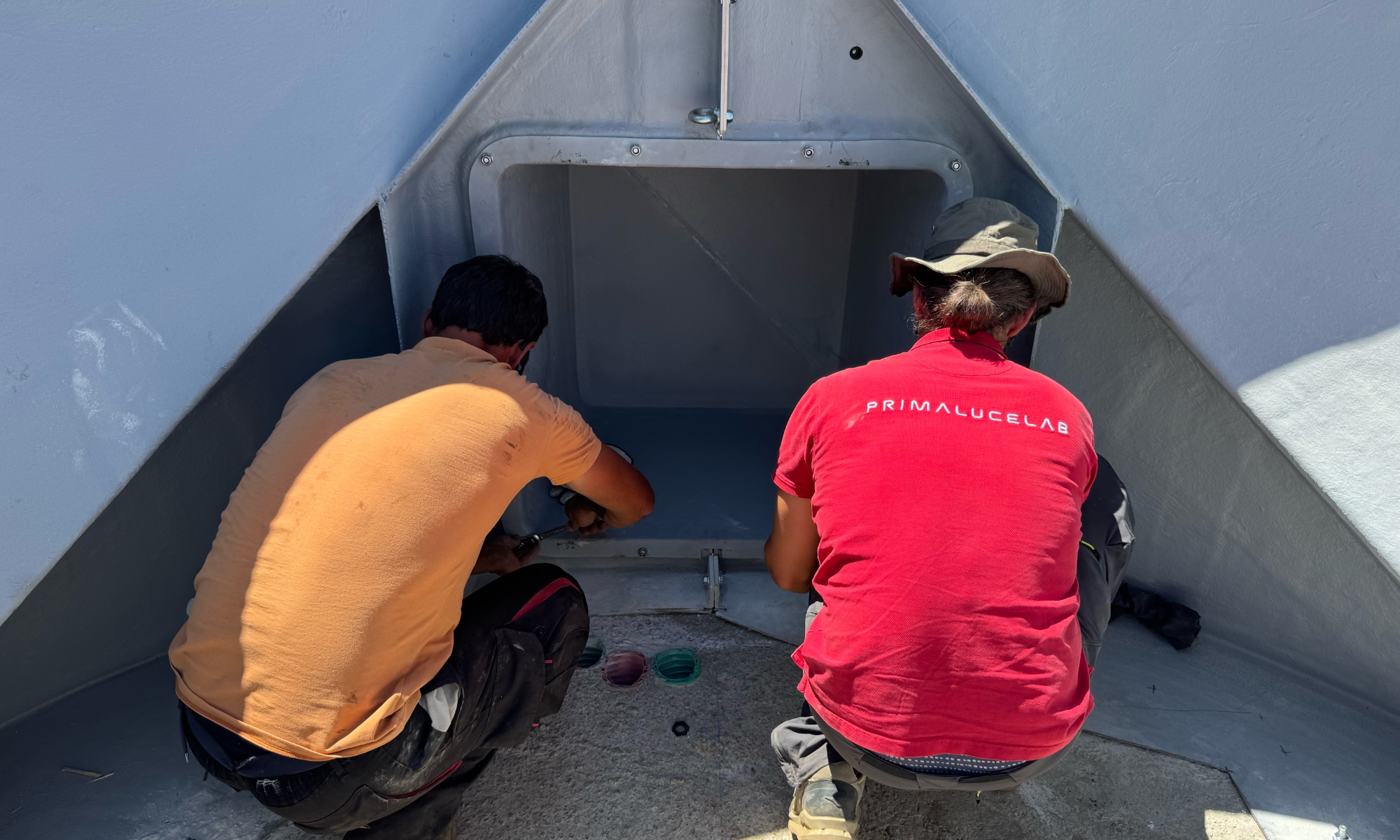
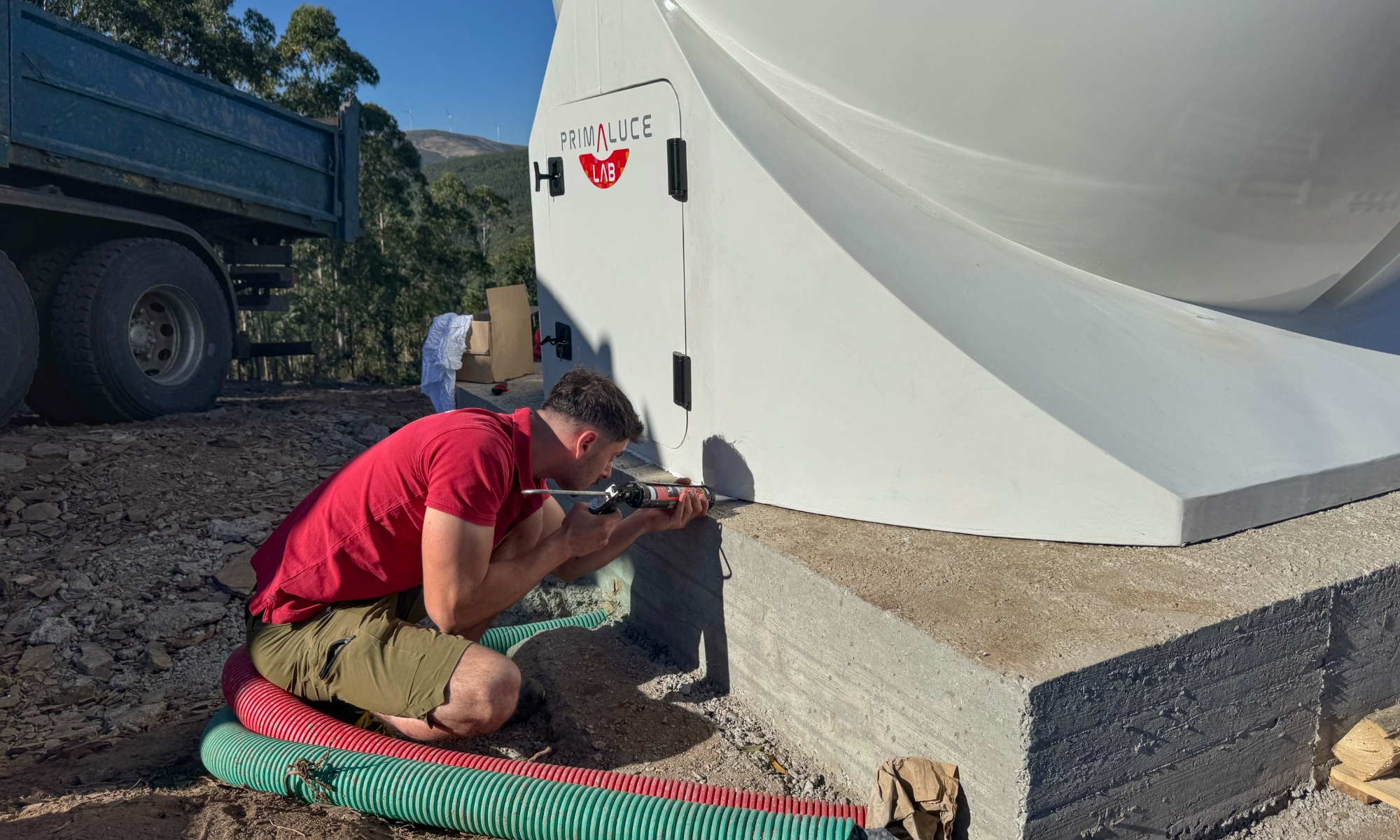
Then we seal everything, outside and inside. A remote observatory is left alone for months and it must stay dry, so every joint and every passage is sealed with silicone. This is important for the life of the instrument.
Now we move to the telescope. The special EQ column is installed on the concrete base and leveled with high precision. The column sets the latitude angle for the AZ2500 DDS in equatorial mode, so this step defines the quality of the tracking that the customer will get for years. We take all the time it needs.
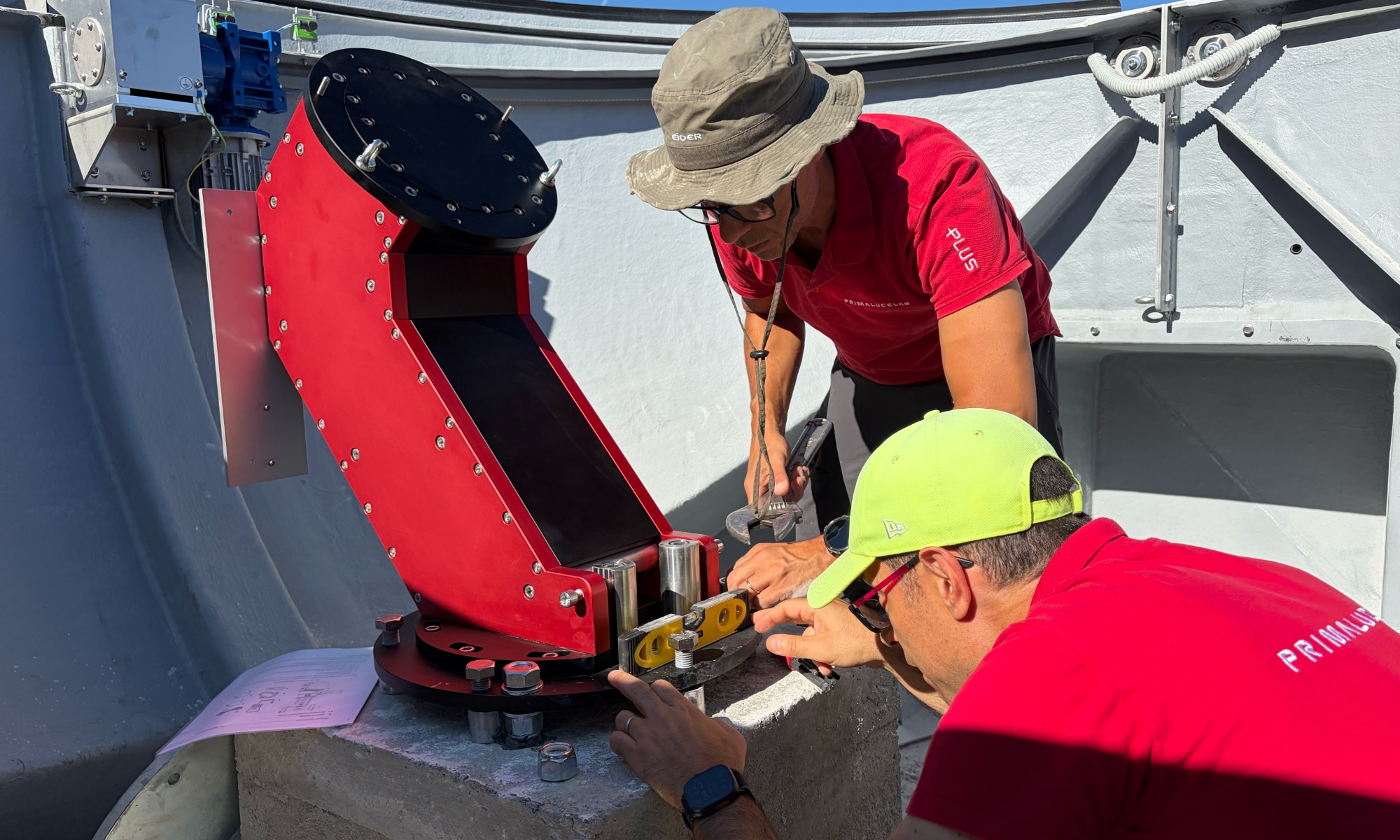
The 10Micron AZ2500 DDS head is lifted and connected on top of the column. It is a heavy and very rigid mount, designed to carry professional instruments and to point them fast and precisely.
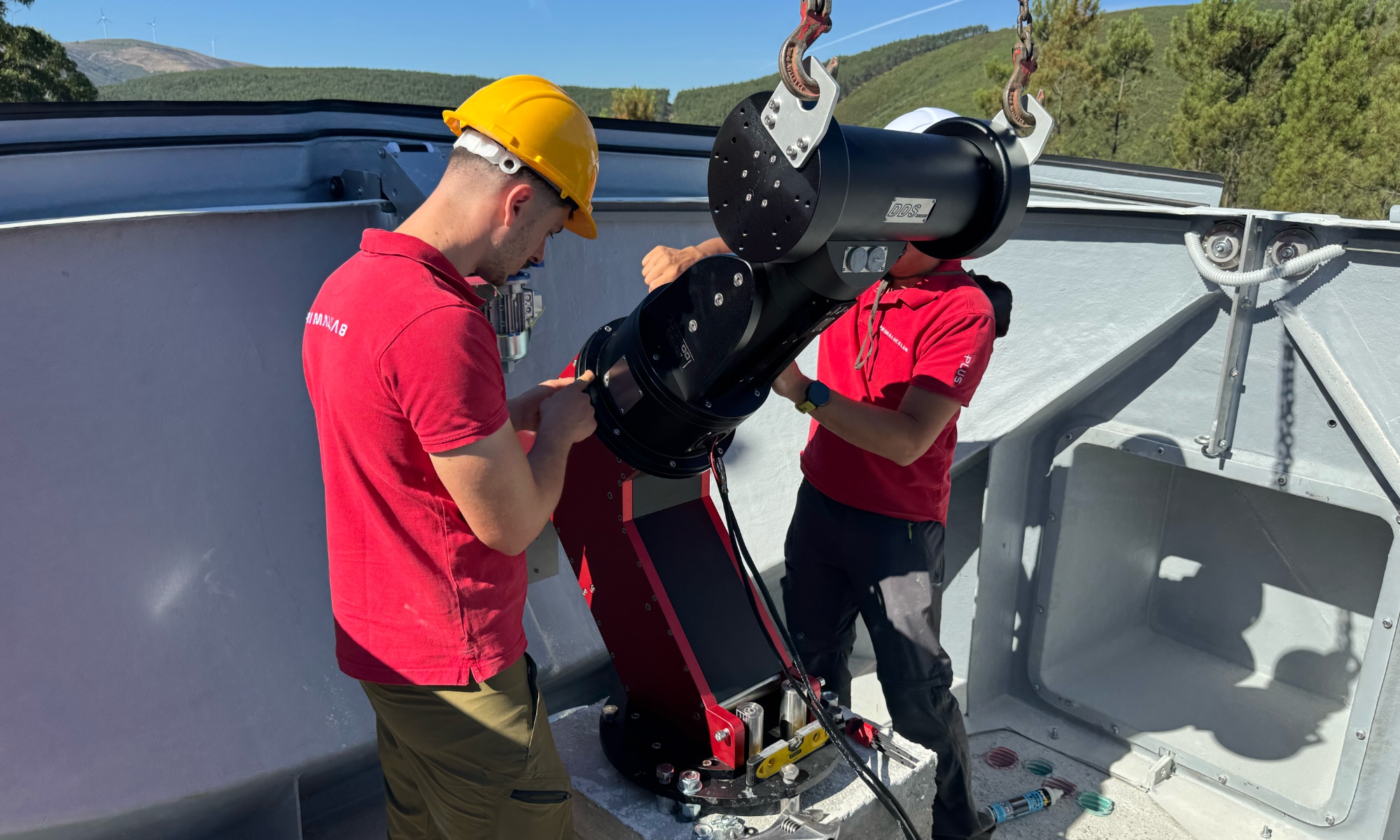
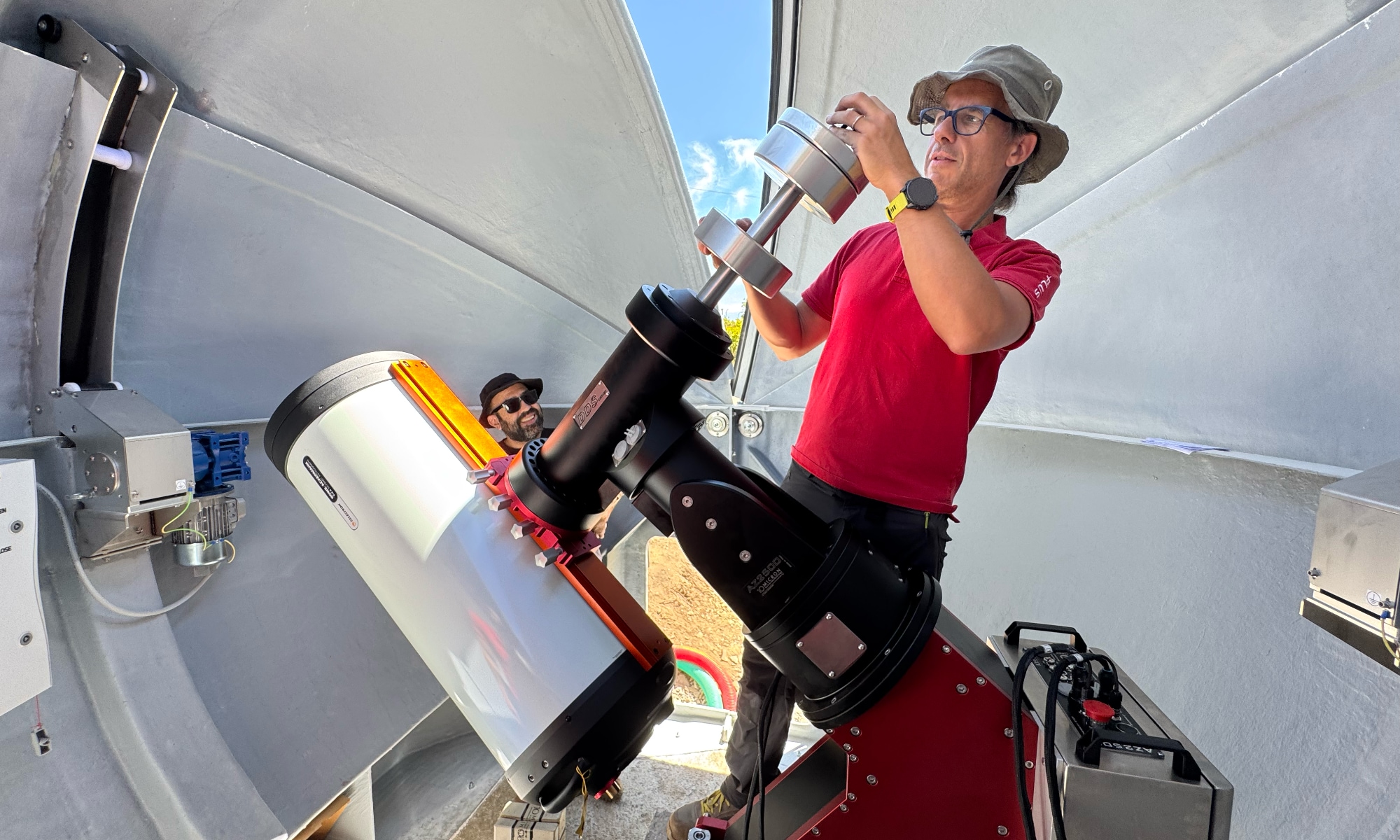
The Celestron RASA 14 is installed on the mount and balanced with the counterweights. Balancing a fast astrograph like this one, with all the accessories that will be added, requires patience, because every element that we install after this point changes the equilibrium.
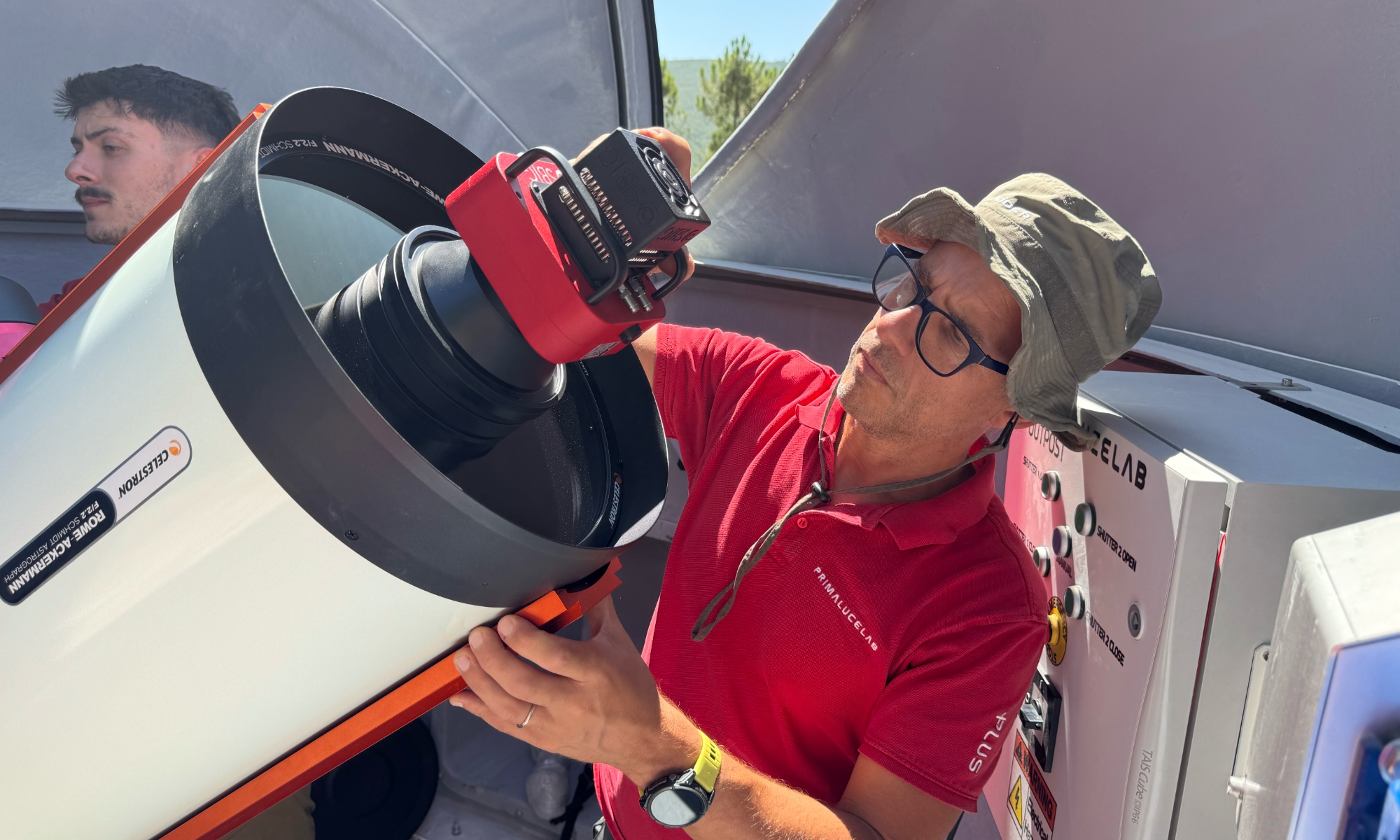
The SBIG Aluma AC4040 is connected at the focal plane of the RASA. The camera is oriented and set at the correct backfocus distance by using a specially designed adapter, so the whole field of view is sharp from center to corner.
On the front of the telescope we install the dew shield with the GIOTTO430 flat field generator, and the ALTO-3 cover motor. With this combination, the observatory can take its own flat frames from remote, and close the telescope automatically at the end of the session. Two operations that normally require a person on site.
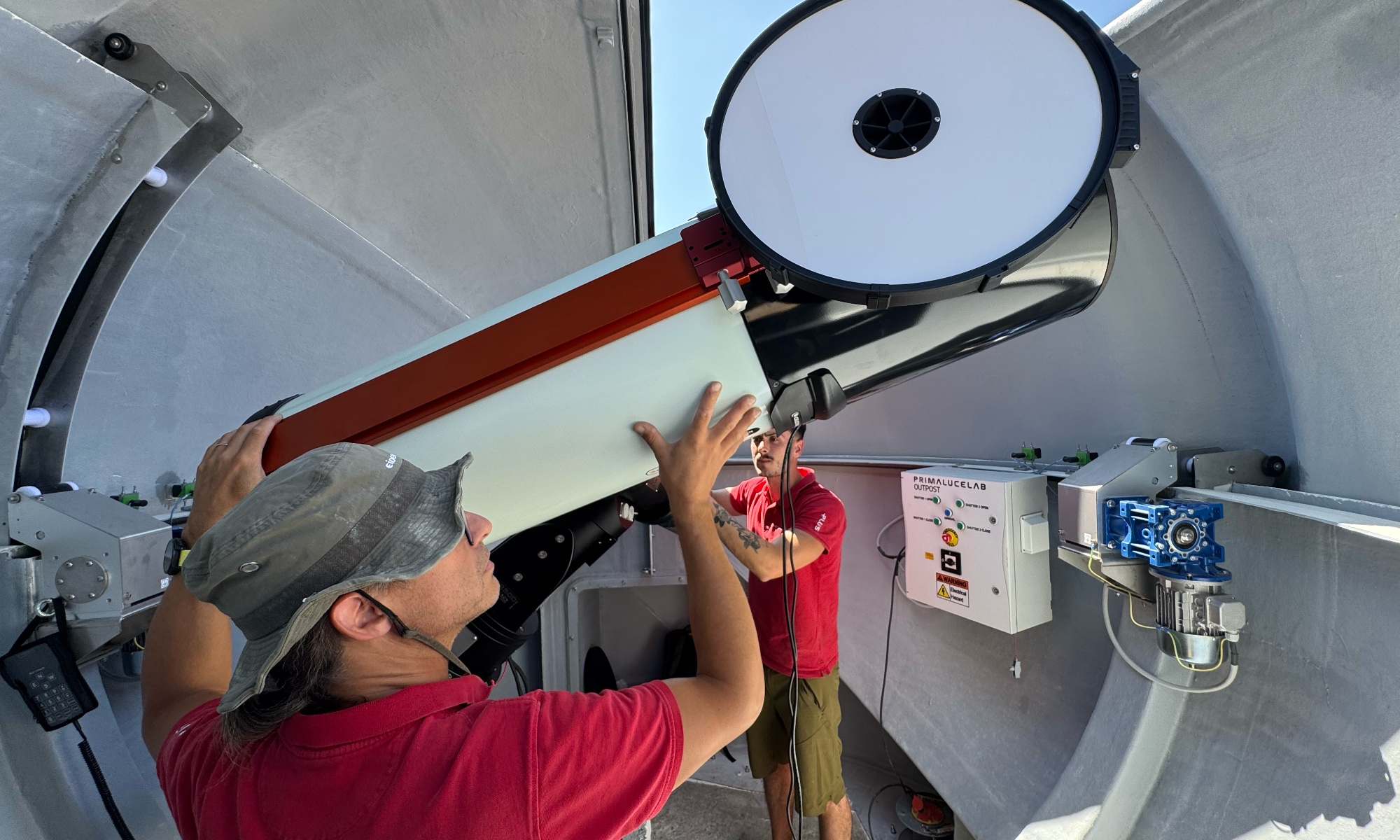
The EAGLE6 XTM is installed directly on the telescope. This is the brain of the observatory: it controls every device, it distributes and monitors the 12V power, it provides advanced sensors and it lets the user connect from anywhere in the world. Having it on board means a better cable management.
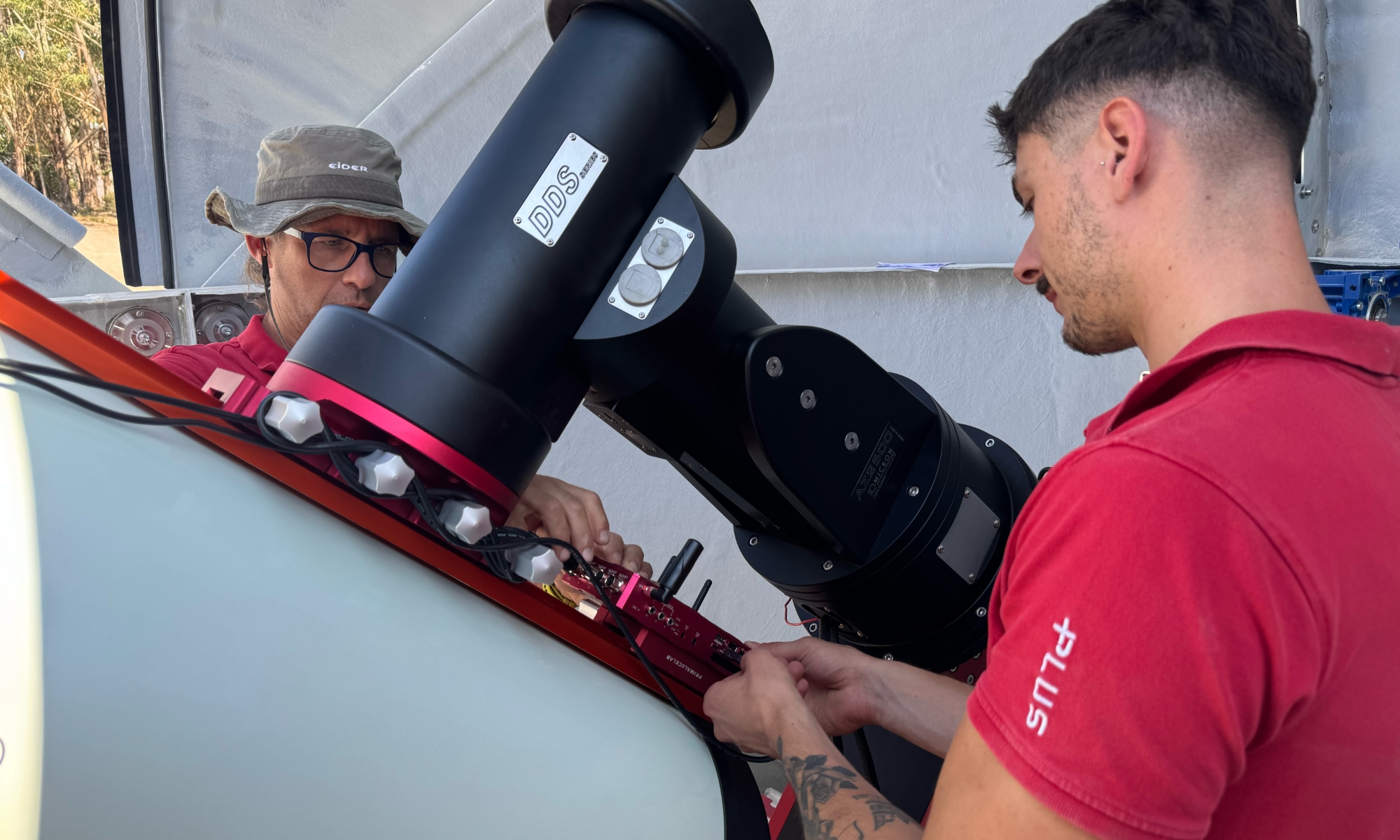
The SESTO SENSO 3 SC is installed on the focuser of the RASA 14. Focus changes during the night with temperature, and on a f/2.2 system the tolerance is very small, so a precise focuser is not an accessory here, it is a requirement.
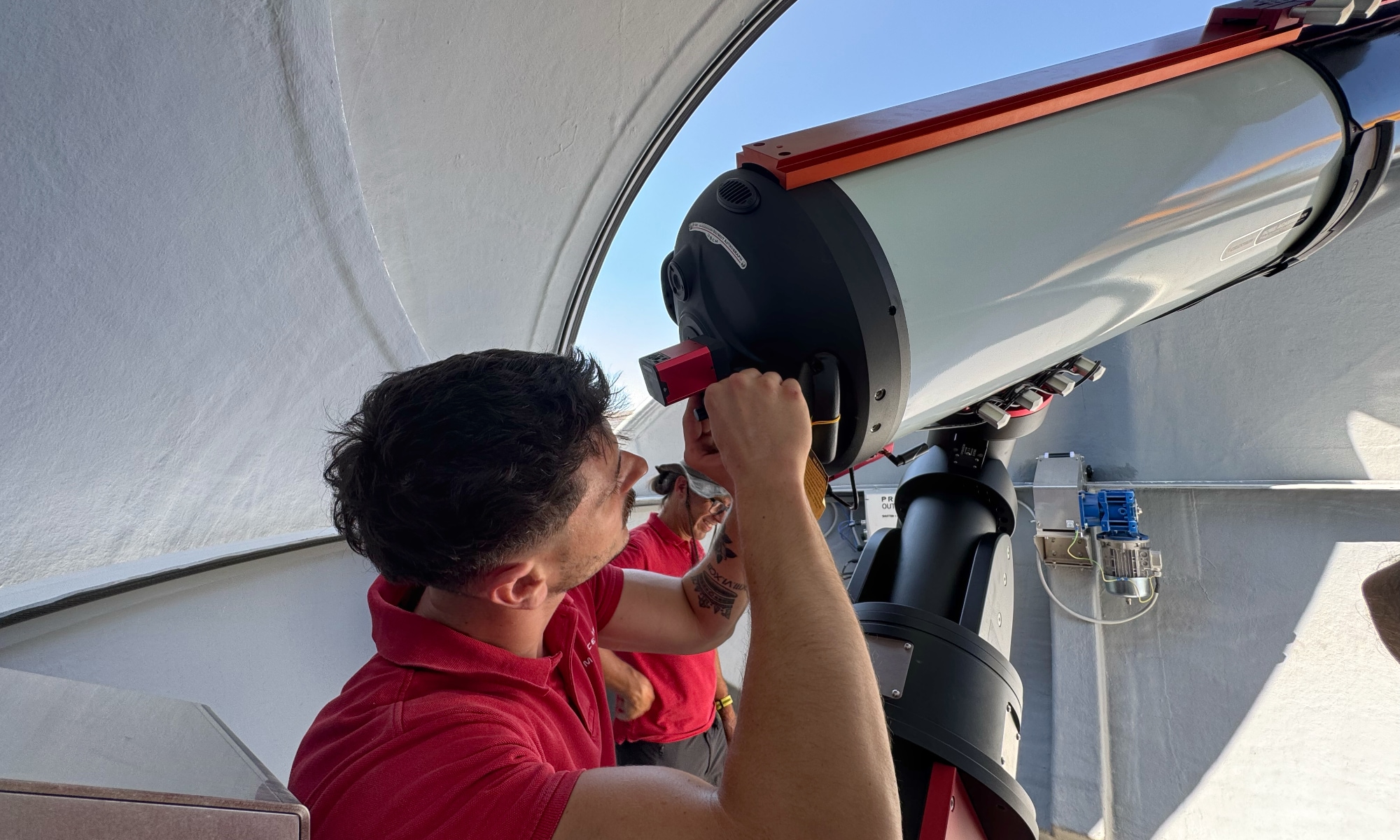
Then we cable everything: USB cables, network cables and 12V power cables. All the cables are routed and fixed so that they follow the movements of the mount without any risk of tension or snagging. A remote observatory has no one to fix a disconnected cable, so this step is done with a lot of care.
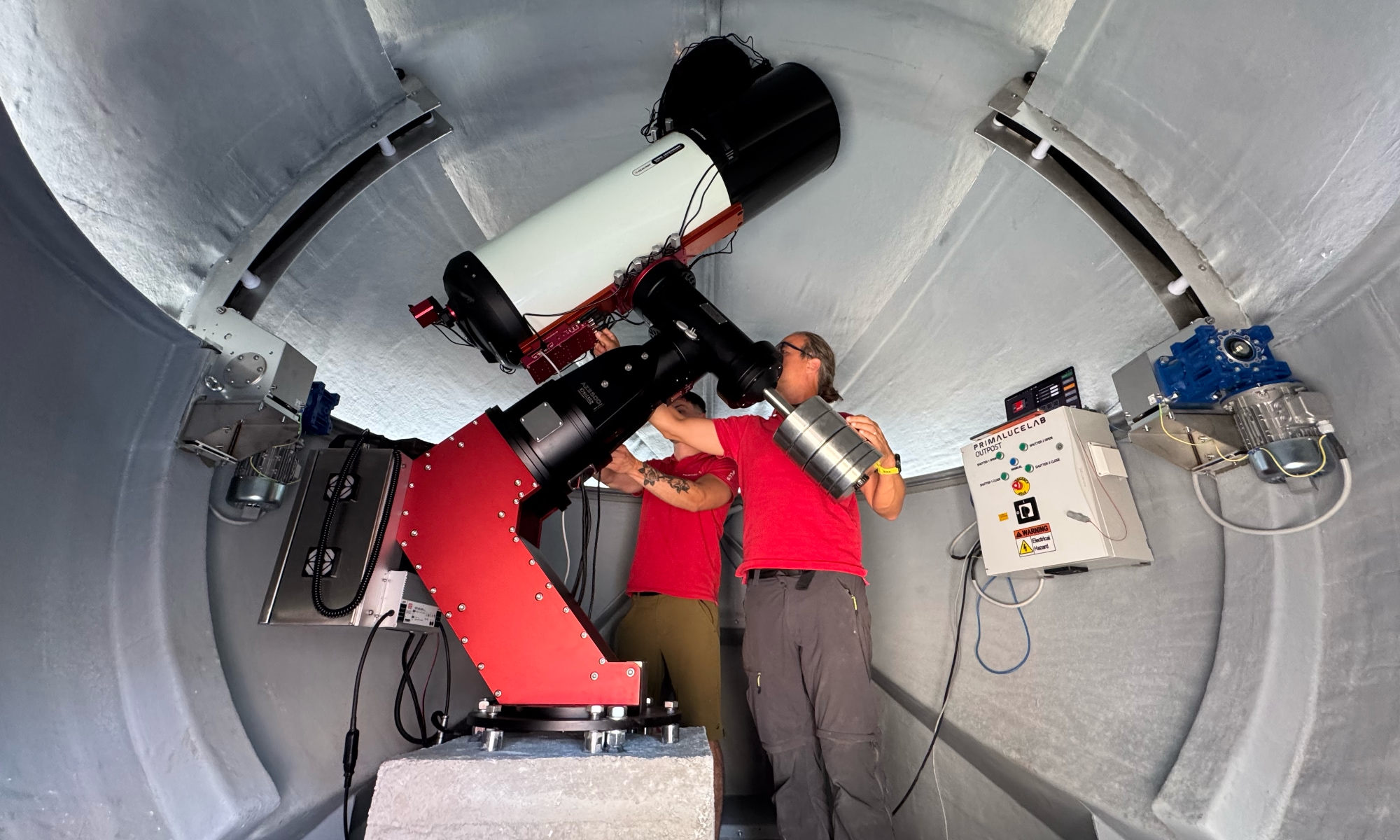
With everything installed, we start the calibration. We test the opening and closing of the dome and of the motorized cover, and we do the fine tuning of the mount movements. We repeat the complete sequence many times, exactly as the observatory will do it every night by itself.
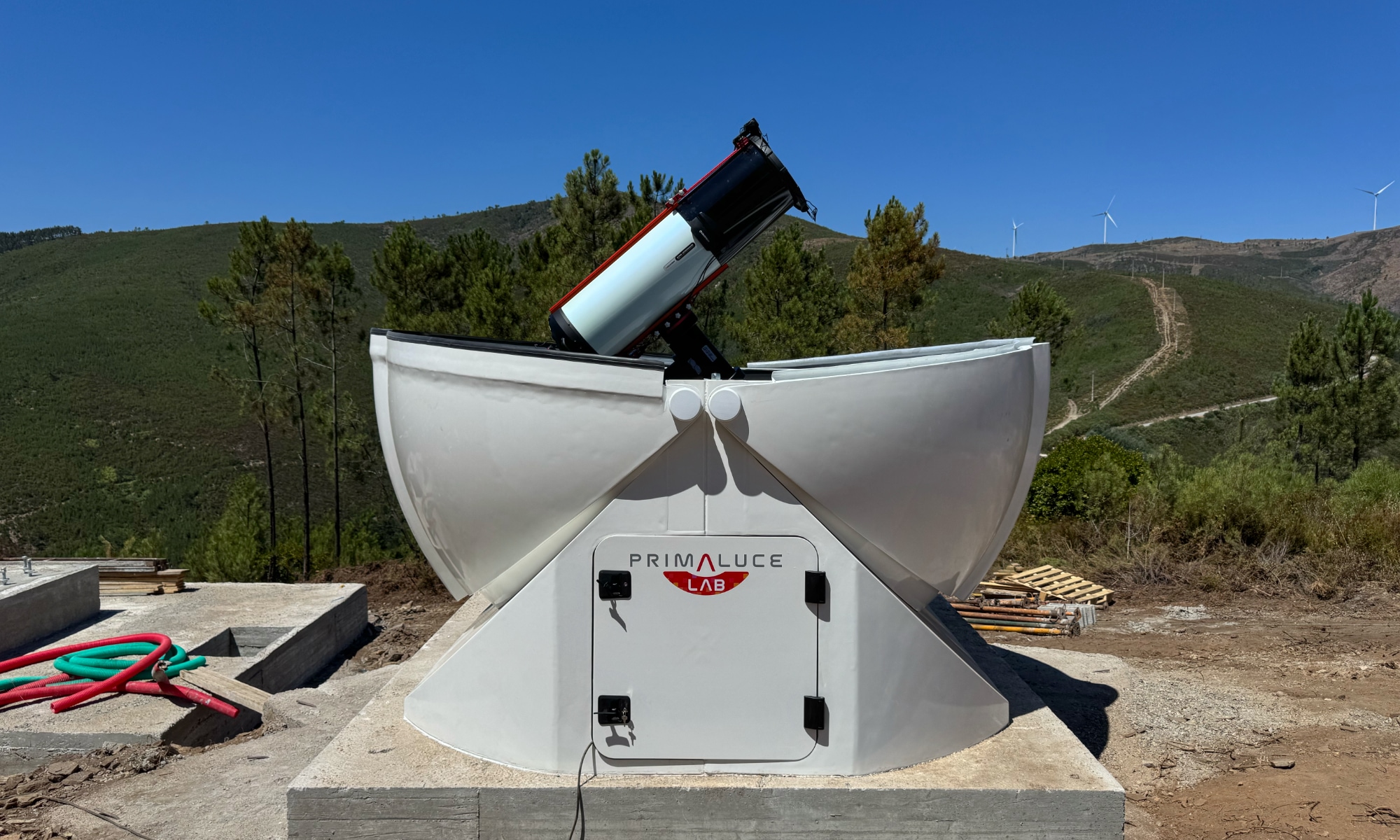
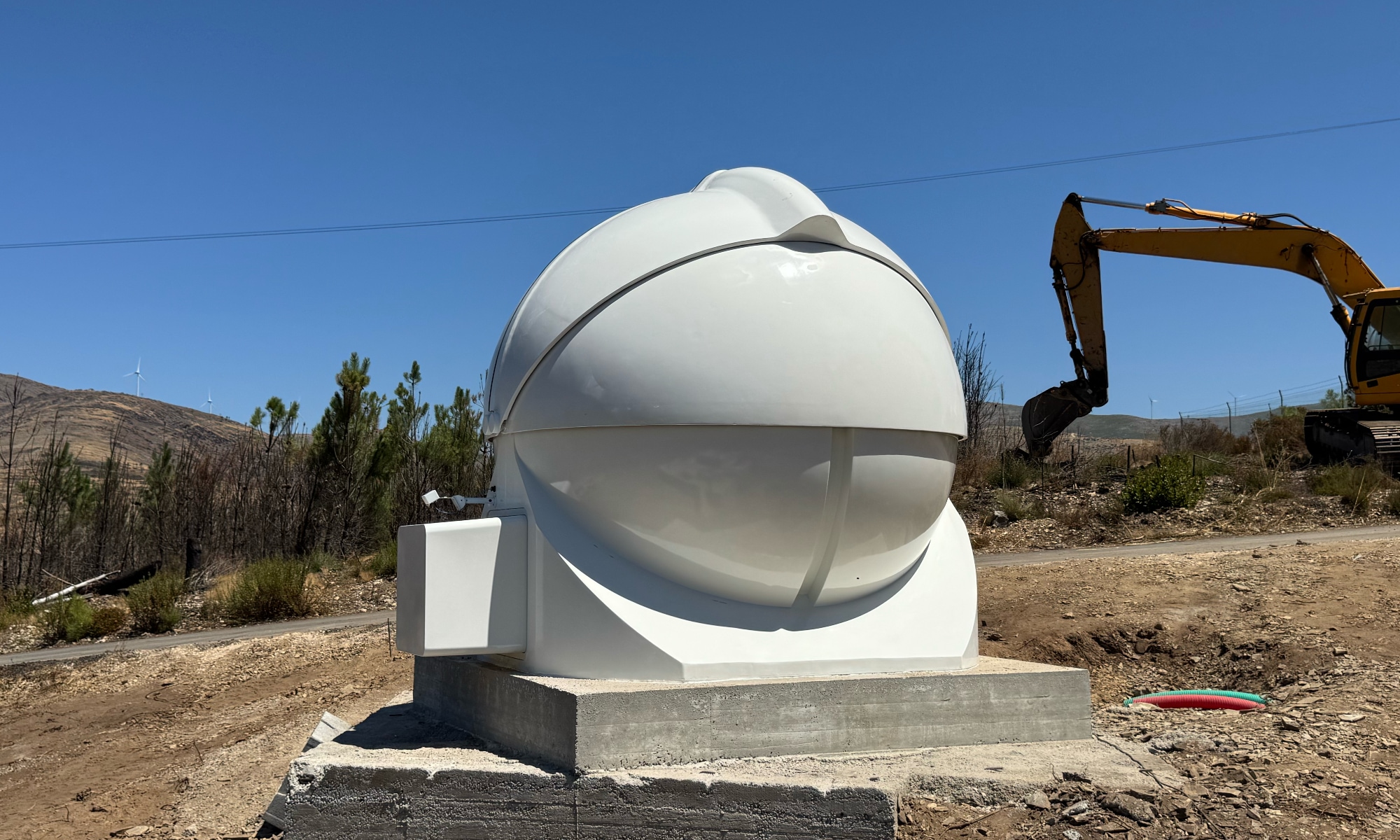
Here is the result. The whole instrument is protected by the OUTPOST 3M dome and the observatory is ready to work, also from remote. From outside you only see a compact white dome on a hill. Inside there is a professional research station.
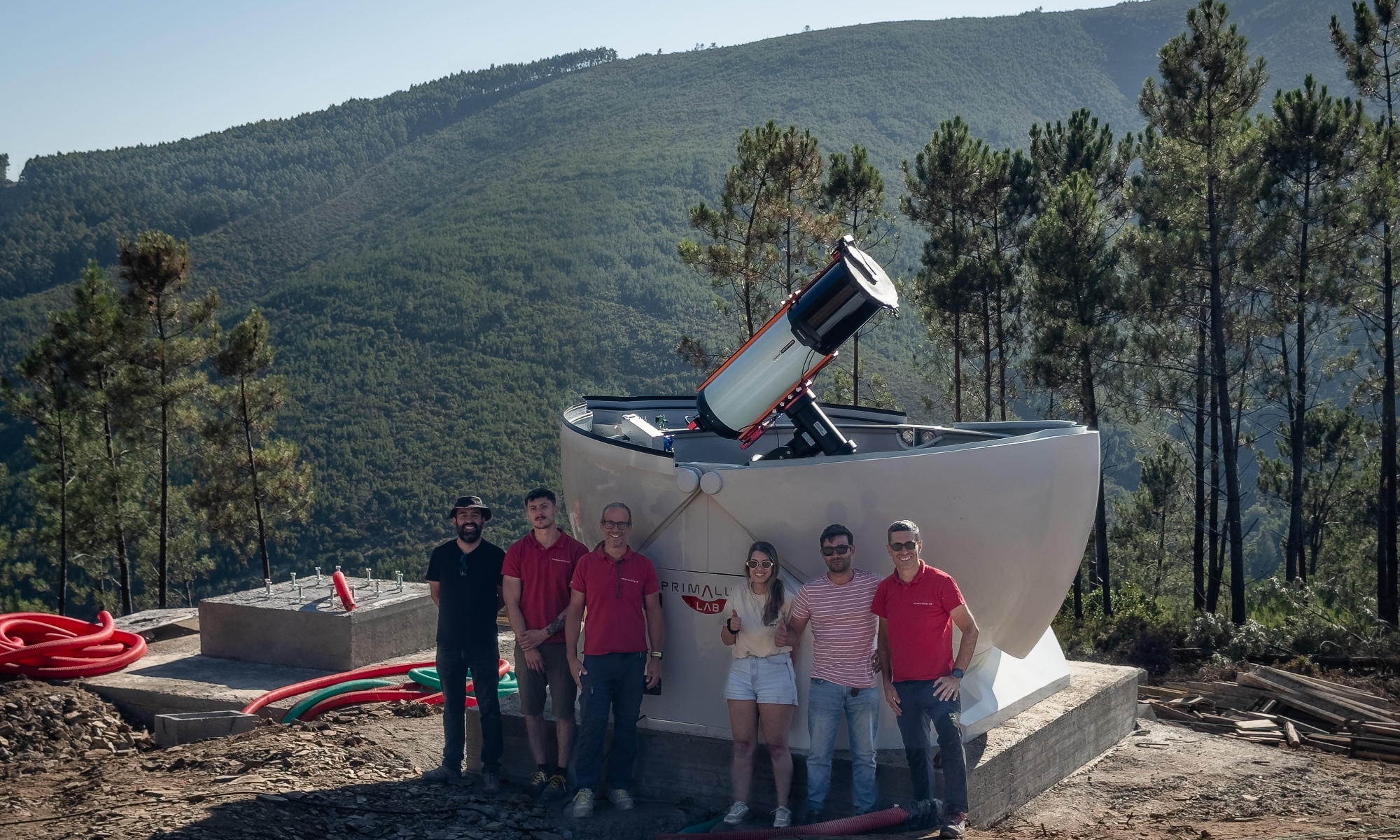
And the traditional photo at the end of the job, with the Atlar Innovation team, our installation team and the new ASTRO-RES Observatory Station. Thanks to everybody for these days of hard work under the Portuguese sun.
This installation says something that we like to repeat: a professional observatory does not need to be a big building. The ASTRO-RES Observatory Station is compact, it can be transported and installed almost anywhere, and it gives research grade performance. We already installed our observatory stations all around the World. Every project is different, because every customer has different targets, different sky and different logistics. This is why we start from the scientific goal, then we design the station around it, and then we install it on site with our own team. Do you have a project for a new observatory, for research, for education or for space applications? Contact us and let’s talk about it.